

Murder Charges in Texas
When the Charge is Murder, There Is No Room for Error
A murder charge is unlike any other criminal case.
It carries the possibility of a life sentence, the potential loss of everything a person has built, and —
in certain cases — exposure to the death penalty. The evidence is often complex, the investigation
is rarely finished when charges are filed, and the consequences of a wrong strategic decision can
never be undone.
At the Law Office of Lisa Greenberg, PLLC, we understand that a murder case is not simply the most
serious charge on the docket. It is the case where preparation, judgment, and experience matter
more than anywhere else in criminal defense.

How Texas Law Defines Murder
Under Texas Penal Code § 19.02, a person can be charged with murder for:
• Intentionally or knowingly causing the death of another person
• Intending to cause serious bodily injury and committing an act clearly dangerous to human life that results in death
• Committing or attempting to commit a felony and, in the course of that felony, committing an act clearly dangerous to human life that causes death — commonly known as felony murder
Each of these theories requires the State to prove different facts, and each opens different avenues for defense. How the State chooses to charge a case often says as much about the strength of its evidence as the facts themselves.

Murder, Capital Murder, and Manslaughter Are Not the Same
Not every homicide charge carries the same exposure, and the distinctions matter enormously:
• Murder (§ 19.02) is a first-degree felony punishable by 5 to 99 years or life in prison.
• Capital Murder (§ 19.03) applies when specific aggravating factors are present — including the killing of a peace officer, a murder committed during another serious felony, multiple victims, or a murder for remuneration — and can carry a sentence of life without parole or the death penalty.
• Sudden Passion, when established, does not excuse a murder but can reduce the punishment range to that of a second-degree felony — 2 to 20 years.
• Manslaughter and Criminally Negligent Homicide involve reckless or negligent conduct rather than intentional acts, and carry substantially lower punishment ranges.
A central part of our work is identifying whether a case has been charged correctly — and whether the facts support a lesser charge, a reduced punishment range, or a complete defense.
What a Murder Conviction Puts at Risk
The consequences of a murder conviction extend far beyond the courtroom. Clients face:
• Decades in prison, or life
• Possible exposure to the death penalty in capital cases
• Permanent loss of civil rights
• Separation from family for the remainder of their working life
• Irreversible damage to reputation and standing in the community
• A record that follows every future decision, opportunity, and relationship
These are not risks that can be managed after the fact. They must be addressed from the moment an investigation begins.

Building a Defense From the Earliest Stage
In a murder investigation, the most important work often happens before formal charges are ever
filed.
Evidence disappears. Memories fade. Surveillance footage is overwritten. Witnesses move, change their accounts, or become harder to locate. A defense built early — while evidence is still available and before the State’s narrative has hardened — is almost always stronger than a defense built after the fact.
We move quickly to secure evidence, identify witnesses, and begin an independent investigation the moment we are retained, regardless of how far along the State’s investigation may already be.
Experience With Serious and Complex Homicide Cases
Murder cases rarely fit a single mold. Our office has handled matters involving:
• Self-defense and justification claims
• Allegations arising from domestic disputes
• Officer-involved shootings and use-of-force investigations
• Multiple-defendant and conspiracy-related homicide charges
• Cases built primarily on circumstantial or forensic evidence
• Capital-eligible cases requiring immediate, aggressive investigation
Each of these case types demands a different strategy, a different set of experts, and a different
understanding of how prosecutors build — and how they can lose — a murder case.

When Someone’s Life and Freedom Are at Stake
A murder charge does not have to define the outcome of a person’s life. Facts get misread.
Investigations move too quickly. Innocent people are charged, and people who acted in self-defense or under circumstances the law recognizes are sometimes treated as though they had none.
Whatever the circumstances of the case, our objective remains the same:
Protect your rights.
Protect your freedom.
Protect your future.
Every Statement Can Become Evidence
In the hours and days following a death, there is often pressure to explain, cooperate, or set the record straight.
Statements made to police, investigators, family members, or on social media can be used against a client long after they are made — often stripped of context and framed in the light most favorable to the prosecution.
Before any statement is made, we help clients understand:
• Whether speaking with investigators is advisable, and when
• How to exercise the right to remain silent without appearing uncooperative
• The risk that even innocent explanations can be misconstrued
• How public or social media statements can affect a jury pool

Every Allegation Has a Story
A police report is not a complete account of what happened. An arrest is not evidence of guilt.
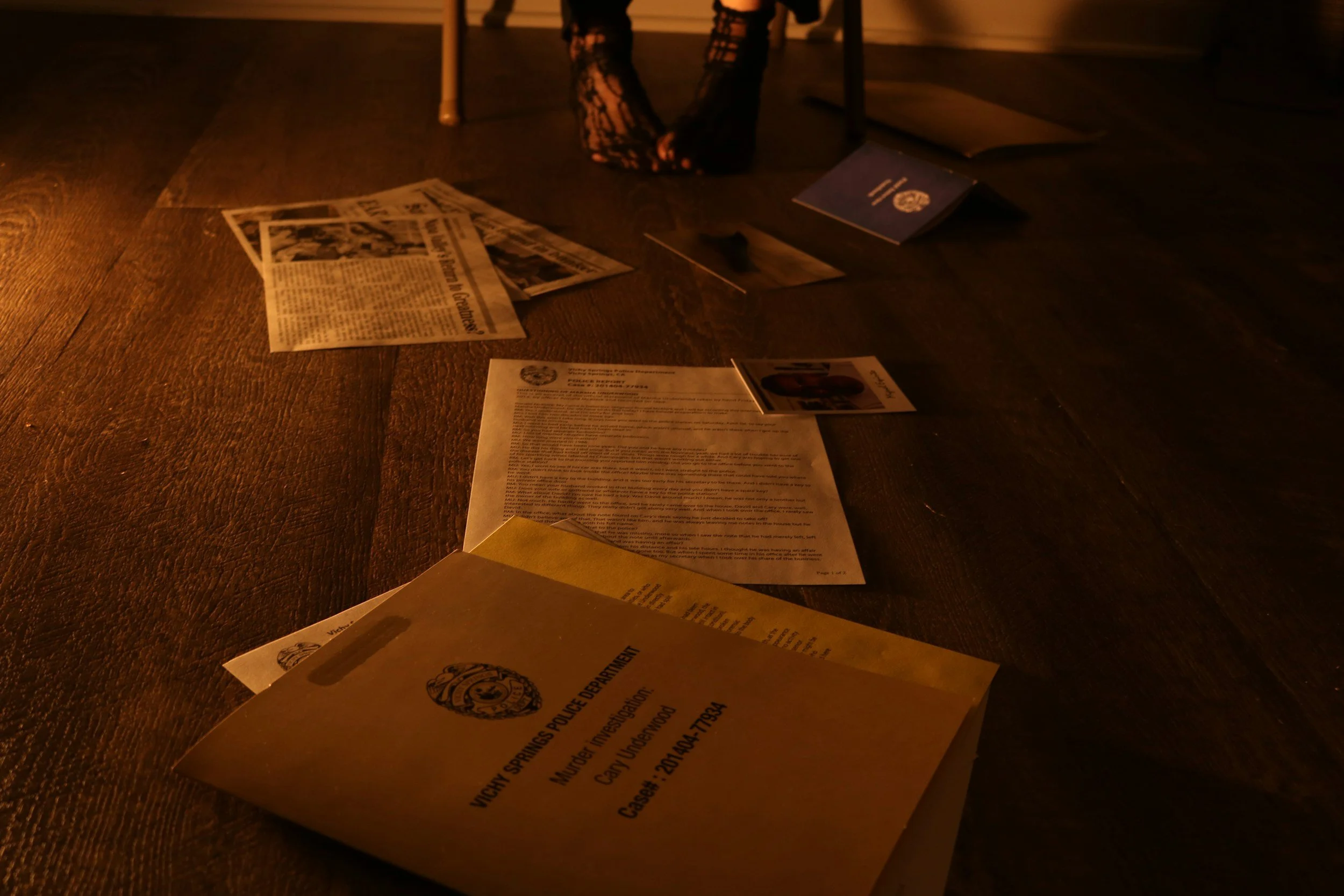
Homicide investigations are often shaped by incomplete information, tunnel vision toward a single suspect, or forensic conclusions that are far less certain than they first appear. Self-defense, misidentification, and alternative explanations are frequently overlooked in the early stages of an investigation.
Before developing a defense strategy, we conduct our own independent investigation — reviewing forensic evidence, consulting medical and ballistics experts where appropriate, interviewing witnesses, and examining the full timeline of events — to understand the complete picture rather than the one presented by the State.

These Cases Demand Preparation
Our office intentionally maintains a selective caseload. Murder cases require the kind of sustained attention that cannot be given to a high volume of clients at once.
From the earliest investigation through pretrial motions, expert consultation, and trial, every decision is guided by careful planning and thorough preparation. In cases where the stakes include the possibility of a life sentence, there is no substitute for that level of attention.
Contact the Law Office of Lisa Greenberg, PLLC

If you or someone you love is under investigation for or has been charged with murder or capital murder in Texas, the decisions made in the earliest hours and days of the case can shape everything that follows.
The Law Office of Lisa Greenberg, PLLC represents clients throughout Texas facing murder, capital murder, and other serious homicide charges, with a commitment to thorough investigation, strategic advocacy, and the level of preparation these cases demand.